Thursday, April 11, 2013

Doll Hater


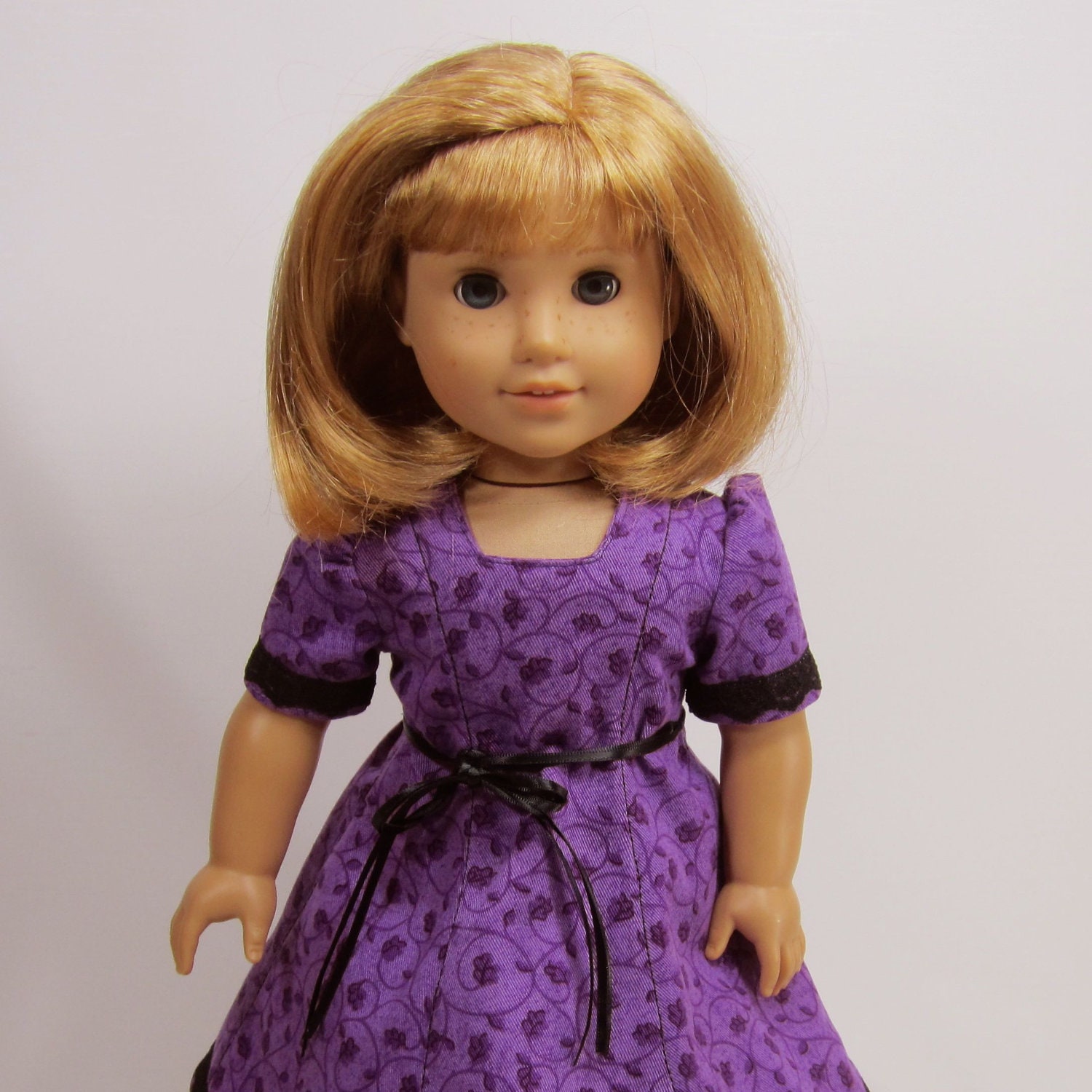
I was never really into dolls when I was little. I was into Barbies but those are different. When I imagine a doll, I imagine a toy like the one in the picture above. They creep me out. It's as if someone trapped the essence of what it is to be a little girl in this toy and the eyes really creep me out. This picture is okay compared to those really old looking dolls, I can handle it. I am not alone in this discomfort with these dolls though as Claudia, the narrator of Toni Morrisons' The Bluest Eyes, despises these dolls more than I do.

Claudia is a little African American girl that lives with her mother, father and sister. They take in another girl called Pecola while the county decides what they will do. Based on the descriptions given by Morrision, they are part of a low socioeconomic level and don't seem to have very much. The mother is shown as a harsh woman when Claudia is sick but, has her moments of gentleness as well. Her sister Freida and her are very close and welcome Pecola when they realize she isn't there to dominate them and the three of them get along.

Claudia discusses her sister and Pecolas fascination with Shirley Temple, an old child star from their times. Pecola always wants to drink out of the cup with Shirley Temples' face on it and discusses her a lot with Freida. Meanwhile Claudia does not understand the fascination since Shirley is like one of those dolls they sell in the stores. Claudia is not even amused by either the dolls or Shirley Temple.

Claudia looked around and saw that "Adults, older girls, shops, magazines, newspapers, window signs- all the world had agreed that a blue-eyed, yellow-haired,pink-skinned doll was what every girl child treasured." (pg 20) This image to her though, was annoyance and hatred. Claudia couldn't understand why this was what everyone portrayed as beauty and perfection. Everyone would become outraged with her for torturing the dolls.

What made this idea interesting to me is when Claudia says her feelings toward the dolls were easily transferred to the living breathing version, little white girls. She describes it as "The indifference with which i could have axed them was shaken only by my desire to do so."(pg 22) Such thoughts don't really go into a childs' mind unless there is a real hatred. I think this could foreshadow a conflict later on in the novel where either she lashes out on a white girl or on those who praise it so much.

Sunday, March 17, 2013

Confusion Through Clear Ideas


There are certain statements that don’t really make much sense. They appear o contradict each other or show the opposite of the first thing that was said, right after it was said. Suddenly you feel confused and try to make sense of said statement. You read it once, twice, three times, trying to make sense of it. As you keep reading you start nodding your head as if you finally understand what is being said but then you read it again and understand nothing. These statements are antithetical statements.

Antithetical statements show a sort of opposite reasoning. It’s as if the meaning of one part will become clearer with the opposite force. It’s confusing huh? To add to the fun, chapters O, P and Q of Reality Hunger were filled with these quirky little statements. Some stood out more to me than others for their antitheticalness (not a real word):

“Great art is clear thinking about mixed feelings” (pg. 136, Shields)

Basically, how can you think clearly about something that is mixed? In art there is an importance for the abstract of a situation and for the obscureness of it. The idea has to be clear about what you are creating whether it is with a painting or a song, before you put the mixed feeling into it. The artist could also understand what seems complex to the rest of the world and creates mixed feelings on the person viewing the art.

“There’s nothing and everything going on.” (pg. 137, Shields)

…Okay? Well, sure we have been in this situation. For example right now as I write this blog. If my dad came in and asked me what’s going on, I would probably say “nothing”. The reality though is that there is a lot going on. I am writing this blog as I listen to music, am trying not to fall off my bed, and thinking about the other homework I have to do. Appearances can be deceiving in this sense that, I might say nothing knowing that there is a whole lot more than nothing going on.

“We’re only certain (“certain only”) about what we don’t understand.” (pg. 138, Shields)

This one is a little easier to understand. Sometimes we run into that person who just won’t accept they are wrong. Even in the topics they have no idea about ,they have an opinion and simply babble on about whatever is being discussed. On another hand, we know the things we don’t understand. We always have doubts about those things we do understand or are trying to add to them. Yet, with those things we are certain of we are more vulnerable. Instead when we are sure we are uncertain about something there is not much to go on. I am pretty sure I don’t understand the curtain industry. I know I don’t know anything about it and that is something I am absolutely certain about.

These antithetical statements are tied with reality. Reality can be paradoxical because there are just so many of them. My reality is very different to those who read this. It’s as if reality is what you make it and there is not one certain way to view it. I feel this quote from the book summarizes it pretty well:

“- the chronic American belief that there exists an opposition between reality and mind and one must enlist oneself in the party of reality” (pg. 146, Shields)

There's not one sole party for reality and the mind, rather your mind shapes your reality, and that is a private party.

Wednesday, March 13, 2013

Social Creatures


Ok fine. I admit it. I (the owner of this blog,) watch reality T.V. I know it might come as a bit of a shock to those of you who think I am half deity and to those that think I don’t own a T.V. But alas, it’s true. I enjoy watching Keeping Up With The Kardashians and Americas Next Top Model. I will also admit to not changing the channel when Jersey Shore is on a number of times. There is just something that is appealing about the “reality of others. Even if it is through a memoir, T.V, or even an essay, it draws you in.

In the essay, Brief Lives by Kate Salter, she explains how Michael Kimball writes the story of peoples’ lives on the back of postcards. One could think of Kimball as an autobiographer, who highlights one moment in a persons’ life. He gets regular requests from people all over the world, asking for him to write a postcard for them. People write to Kimball telling them about themselves and there is “Something about email communication, and the fact that he is a stranger, makes them very open.” (Brief Lives, Salter)

People enjoy sharing their stories with others as the article about Kimball proves. In Reality Hunger they also talk about this. Memoirs are mentioned as well as essays. I think that in all of these forms of writing there is a sense of capturing a moment how you want it to be captured.

In an essay there is less freedom for the imagination because it is generally associated with non - fiction writing. Still it is not that different to what Kimball does with his post cards. The postcards themselves could be thought of as essays about real events and real people. He is an autobiographer to all these strangers. Those that write essays are “ a specie of metaphysician: they’re inquisitive and analytic about the least grain of being.” ( pg. 133, Shields) This is true because there is a fair amount of research that goes into essays unless you are completely writing a fantasy essay, which I don’t even know if it exists (My teacher is probably reading this so there’s a question for him to answer in class). Even the postcard guy has to find out more information from the people he writes to.

Kimball writes other people stories and has to find out about them. These people must not know about memoirs or they just like sharing their story. In a sense that is what Kimball is doing, he is writing a memoir for other people. Yes, I know it is not a memoir if someone else writes it. A memoir could be anonymous and the thrill of that might be great, but as is explained in the article: “what I'm doing is very public - full names, photographs. A lot of the people who are participating are claiming - or reclaiming - themselves.” (Brief Lives, Salter) In a memoir there is the same sense of self exploring, but these postcards are just another excuse to be egocentric and talk about yourself to someone who is not only willing to listen.

Shields writes that “a conversational dynamic – the desire for contact – is ingrained in the form” (pg. 133, Shields) No matter what form is being employed whether essay, memoir, or a script for reality T.V, it is that human want that pushes us to communicate. Humans are social creatures that want to get their point across no matter what. 

Wednesday, March 6, 2013

Reality and Genre


Reality Hunger uses aphorisms to add to the collage that Shields has created. There are allusions, direct facts, and aphorisms mixed up in each chapter but they all have to do wit a single idea. The aphorisms I chose had to do with ideas of reality. How we accept certain things to be true or influence the actual facts to match up with the reality we wish was there.

"Genre is a minimum security prison" chapter G

Genre is not the final say. A person might classify a book as a mystery while another might consider it a thriller. I agree with the quote because By relating genre to a minimum security prison, it is understood why it might be of little importance at times. The genre of anything can jump from one to another depending on the perspective of the person. Each perspective is different but accepting when it becomes aare of something decided before hand. For example, if told by my teacher that the book we are reading is a mystery, I accept it is a mystery. If I did not have this knowledge before hand, I would classify the novel based on my own perspective. Sometimes our own perspective and the given language might combine and this is how we notice how genre has minimum security. There might be rules or ideas how to classify something but in the end, they are not mandatory to follow. 

"Our culture is obsessed with real events because we experience hardly any" chapter H

I think it is not exactly that what we experience isn't real, but rather that it is not the real events we want. The media and TV shows make the most random events seem like something that we should be experiencing on a daily basis. The obsession describes in this aphorism could explain our fascination with reality TV  The realities presented in Jersey Shore or The Kardashian's, seem to be way more interesting than our own realities and so people attempt to mimic these realities and these are the fake realities. I blame this for making people feel disappointed with their lives and not really experiencing reality.
"In our hunger for all things true, we make the facts irrelevant" chapter I It does seem this way. When we want something to be true we disregard even the most obvious facts. In a sense this aphorism could describe ignorance. We rather believe what we want than actually acknowledge the facts that prove that it isn't this way. For example, a bad relationship. Maybe the guy is very subtle in the way he hurts the girl and it takes her some time to realize the truth behind what the guy said. She realizes he is hurting her and that she is not happy in the relationship but instead of acknowledging the facts, she turns them into something with no importance. In the girls hunger for something true, in this case love and acceptance, she makes the facts that point out how bad the relationship really is, irrelevant.

Wednesday, February 27, 2013

Imposter?

The reality of Reality Hunger is that it is all plagirized. David Shields got a bunch of text that is not his, organized it in a crafty way, and then makes it all stream. If you read this book, you will find that the chapters are by letters and in each chapter there is a bit of historical information. There are sections which explain how a form of writing came to be and then it switches to something someone said about it or even a definition about what is being discussed. It kind of feels like a book filled with facts for you to discover.

Such said facts are in the book for a reason. It is not simply a crazy guy trying to trick the system but rather, someone who is trying to prove a point through others proving the point for him. For this reason, the author uses allusion throughout the book. One second a movie is being mentioned and then there is a bit of text explaining how the Bible and Odyssy came to be so reprinted. It is a bit ironic that the writer writes about the creation of copyright when he himself is breaking it from every angle possible. All this. All these jumbles of seeming disorganized information are bits and pieces that make up allusions to the different texts.

There is a mention of James Frey in chapter D. What caught my attention and made me want to investigate who he was, was the following:

"I mean, I knew I'd never be the football star or the student council president and, you know, once people started saying I was the bad kid, I was like, "All right, they think I'm the bad kid. I'll show them how bad I can be."

Looking up where this passage came from, it was James Frey who said it. So I wanted to know who he was and why Shields was making him such an important part of this chapter. Along with this google search, came mug shots that only seemed to affirm what Shields put in his book. Yet, it was about memoirs in the end.

It turns out that the books written by Frey are memoirs. One especially, A Million Little Pieces, told the story of Frey spending eighty-seven days in prison. The story itself was well like but this "memoir" was surrounded with controversy. Frey has admitted to making up parts of this memoir and saying he only wanted it to flow and have a little more action. Oprah interviewed him and got him to admit to the truth in this controversy. After it all blew over, Frey continues to write and gets both good and bad reviews.

Chapter D in Shields book is about memoirs. It is interesting that he would choose a fake memoir writer to open the topic. Maybe Shields believes that its ok to embellish your writing a little bit and add something else into this genre. He might also just be criticizing Frey for having done what he did. The fact that this particular memoirist was mentioned and not any other, just seems odd and can be looked at from many perspectives. 

It might also just be the call for acceptance of writing without really labeling it. Is genre something absolutely necessary when it comes down to it? It is because we put such an emphasis on it that "scandals" like the one Frey faced occurred. Shields might be wanting a middle ground. Where all genres can meet and no sort of scandal need occur for damage to writing itself to be taken in such a way.


Saturday, February 16, 2013

Manifest...OH!


People have this urge to express how they feel about a topic and have an inexplicable longing for others to side with them. It sounds bad but most of the times people are trying to get others to side with them on the negative aspects of a topic. There is a certain urging to this that can incite some sort of movement or change someone’s way of thinking. Opinion is something powerful and in the Cartagena Manifesto and Reality Hunger, the opinion of the two authors incites those who read them, to express something.
 
When I read the title Reality Hunger, I assumed the book was going to be about being hungry. But it was of course not abut that. I am not going to lie. Reading those first three pages left me confused and having to re-read them over and over. The author puts many movies and T.V shows into a list and explains a little bit about them. Some of them feel as if he is describing them in a mocking tone like The Bachelor ("tells us more about the state of unions than any romantic comedy could dream of telling us." (pg 4)) So bring all these medias together and writing out what they are about, is his manifest that we should hate them?
 
The Cartagena manifesto might be a little clearer, even though it was written when everyone who reads this was a very negative number. In it, Simon Bolivar is expressing his views on Venezuela. According to him Venezuela's political ways have doomed the country and it is why he escaped. He is expressing is discontent with the killing in a town called Coro and how the government is simply being close minded. Bolivar is not pointing to Venezuela as the enemy. He actually blames the Spaniards and it is them he wishes to get people to agree with him on:
 
"They were shamelessly committed by the malcontents, and particularly by our born and implacable enemies, the European Spaniards, who had schemingly remained in our country in order to keep it in continual turmoil and to foster whatever conspiracies our judges permitted them to organize, by always acquitting them even when their misdeeds were of such enormity as to endanger public welfare.” (Cartagena Manifesto)

 
From what I understand from Bolivar, a manifesto is inciting fervor in others to agree with something you are saying is happening. He is expressing how he feels about something and saying it with topics that might make the others agree with him. 

 
Then there is Reality Hunger. From what I understand, his manifesto is more towards arts. An artistic movement that takes into account the times we are living in. The author gives all these examples of the modern way people are viewing the media.It also feels like the author is mixing everything together like a collage. Thats why it is confusing to understand since it is just a bunch of ideas put together.

 
Manifesto from what I have gathered, is a form of writing in which the author wants to express an idea through different examples and get others to agree with him. The author manifests their views to everyone else but hopes to get support in return.